Square Roots: What This Building Can Stand For

This is the fourth and final piece in this short series about Square Chapel.
The first was about why the building matters to me. The second was about what might need to change. The third was about the immediate problem: a historic building, a messy position and a future that is not mine to decide.
So this is the hopeful one.
What could Square Chapel stand for?
What could it mean to Halifax if it came back as a place shaped by the people around it?
And just so I'm clear at the top, this isn't a bid, it isn't a reopening announcement and it isn't me saying some agreed plan exists. I don't control what happens next. I'm just trying to set out what feels worth working towards.
A building that belongs to Halifax
When I say Square Chapel should belong to Halifax, I don't necessarily mean in a legal or financial sense.
I mean it should feel answerable to the town.
A venue shouldn't sit apart from the people who use it, work in it, live near it or remember it. It shouldn't feel like a sealed box that opens at seven o'clock, takes your ticket money and shuts again once the last person has gone home.
That's not a swipe at any one organisation. It's just a question about what shape the thing ought to have.
If a building is part of the identity of a place, the place ought to have a real relationship with it.
Square Chapel has a remarkable setting. It sits next to the Piece Hall, close to Eureka! The National Children’s Museum, right in the middle of Halifax’s cultural quarter. The town centre is already telling visitors that this is a place where history, ideas, entertainment and people can meet.
Square Chapel ought to be part of that conversation.
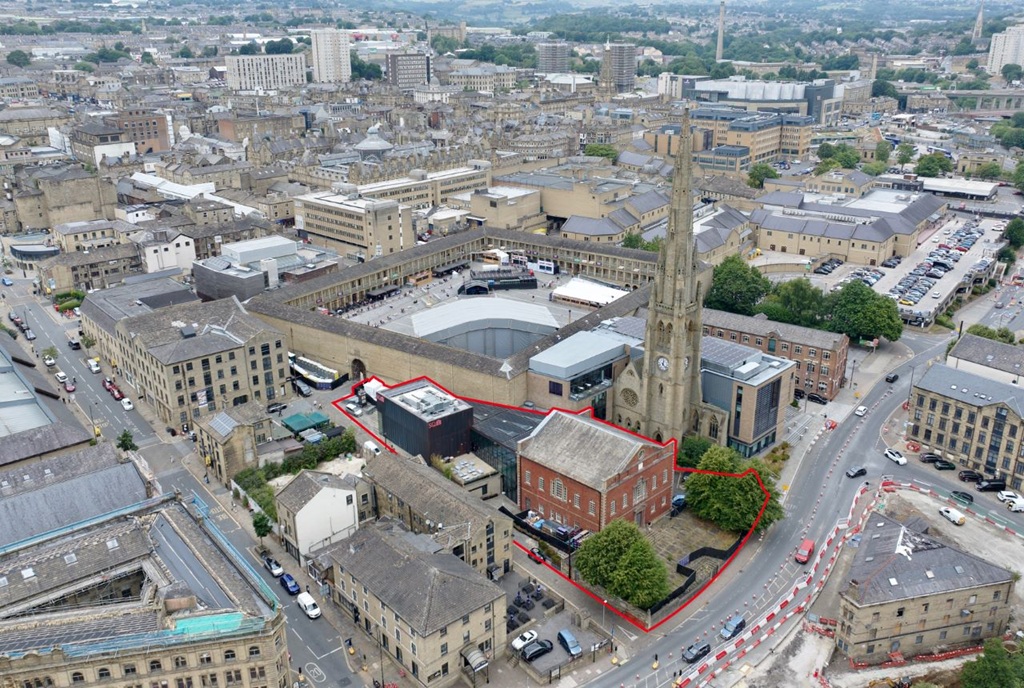
That doesn't mean it has to become a grand civic project covered in mission statements and people called Programme Development Leads.
It's much simpler than that.
The building should be useful to the people of Halifax, and the people of Halifax should have a say in what useful looks like.
Four groups, one place
For Square Chapel to work again, four groups need to be properly in the room.
First, the local business community.
Businesses have a real stake in a town centre that works. They benefit when people visit, stay longer, eat, drink, shop and come back. They also bring skills a cultural organisation badly needs: financial discipline, marketing, operations, hospitality and the ability to notice when the numbers are quietly setting fire to the curtains.
And I don't mean business as a sponsor to be wheeled in at the end, once everything else has been decided. I mean business as a proper partner from the start. A venue that is busy is good for the businesses around it, and businesses that are doing well help make a town somewhere people actually want to gather. That works both ways.
Second, Calderdale Council.
It knows the town, the building's place in Halifax and the wider civic picture. Nothing lasting happens here without it being part of the conversation.
Third, Arts Council England.
It sits inside the funding and cultural framework around the building, and its support would plainly matter to any arts-centre future. I am not suggesting any commitment has been made.
Fourth, the Save Square Chapel community group.
They bring local knowledge, community energy and a genuine connection to the place. They have also earned real credit for keeping the issue alive while the building has been shut, and I do not think that should be treated as a footnote.
Those are the four whose support and involvement any future plainly depends on.
Alongside them, the artistic community has to be in the room as well.
Performers, technicians, producers, makers, writers, musicians, filmmakers, teachers and all the people who make things happen before most of us have even found our seats.
An arts centre without artists is rather like a kitchen without food. You can polish the worktops, but eventually somebody is going to ask what is for dinner.
And so do the people with a personal history in the building.
People who performed there. People who worked there. People who met there. People who took their children there. People who grew up seeing the building on the Halifax skyline. People who may never have bought a ticket but still feel that it is part of the town.
None of those voices can just be wheeled in at the end, once the important decisions have already been made. They need to be in the conversation from the start.
That's the difference between collaboration and takeover.
A takeover says: here is the new answer, please support it.
Collaboration says: there is a building with history and possibility; what would it take for this to work, and what can each of us contribute?
It's slower, yes. But it's also far more likely to produce something people actually recognise as theirs.
And I think the same applies to the wider picture. If Square Chapel is ever to have a future that feels real and rooted, it will only be because the people who use and love the building are working alongside four pillars whose support plainly matters: the local business community, Calderdale Council, Arts Council England and the Save Square Chapel community group.
I'm choosing my words carefully there. I'm not saying any of those four have agreed anything, backed any plan or committed to any particular course of action. I'm saying something simpler than that. Any serious future for this building will depend on those conversations being joined up, respectful and grounded in the people who care most about the place.
And if those four strands can be brought together properly, then you have at least the chance of building something that works in the real world: a model that secures the building, secures its future and secures its standing as an arts centre. Warmth on its own doesn't keep the lights on. You need a working model as well.
Not a place that starts with the building
I'd like Square Chapel to be run with people at the centre.
That sounds obvious, but it isn't.
Some places start with the building and work forwards from there: how do we fill the rooms, sell the tickets and keep the thing moving? Fair enough. But a community-led arts centre starts somewhere else. It starts with people. What do they need? What can they offer? What does the building make possible?
That could still include professional performances, films, exhibitions, workshops and events. It could still have good coffee, decent food and somebody who knows where the spare batteries are.
And it doesn't have to choose between being serious and being popular.
I just think it should feel more open. A place where a professional performance can sit alongside a local project. Where a business meeting happens in the morning and a rehearsal in the afternoon. Where somebody can walk in without already knowing the correct cultural password.
There'll always be somebody who says that sounds too broad.
They may be right. But Square Chapel has more than one auditorium. It would be a bit odd if the building itself could accommodate different things but the thinking couldn't.
The building has already done this before
This is not a completely imaginary idea.
Square Chapel was built in 1772 as a place where people gathered. It was not designed as an arts centre, of course, because in 1772 the phrase “multi-use cultural venue” would probably have caused a minor incident.
But the basic need was simple enough then and it still is now: a room where people could gather, hear and take part.
That is the foundation everything else sits on, and I think it is exactly why the building has lasted.
People came together in the same room.
After falling into disrepair, the building was saved and brought back into use. It has been used as an arts centre since 1992, and a £6.6 million refurbishment was completed in 2017.
For more than 30 years, it was a working arts centre, performance space and social venue.

So the question isn't whether Square Chapel can be a place where people gather.
It already has been.
The real question is whether it can do that in a way that is sustainable, open and properly connected to the town around it.
That's especially true in the summer, when the Piece Hall programme is in full swing. I think those events are amazing. They make a real contribution to the local economy and bring thousands of people into Halifax. No criticism from me at all. Quite the opposite, really. When the town is alive like that, it reminds you what a place can feel like when people have a reason to be there.
At the same time, I don't think it's daft to say those summer night-time events would present real practical challenges for any future Square Chapel operator. That's not a complaint. It's just part of the reality of the setting. And the clever question, to my mind, isn't how to wish those challenges away but how to turn them into an opportunity rather than a limitation.
For three or four months of the year, with all that life effectively on the doorstep, Square Chapel could have a different rhythm to the rest of the year. It could come alive during the day and work differently at night, leaning into the crowd outside rather than pretending it isn't there. In human terms, that might mean somewhere to eat, drink and meet before or after a show, daytime performances and workshops, exhibitions, screenings and a building that feels open and busy when the town itself is open and busy.
I'm not announcing a programme there, and I'm not suggesting any agreement with the Piece Hall or anyone else. I'm simply saying that a building which works with the town's biggest summer draw rather than in spite of it is a different proposition altogether. And, like everything else in this piece, that only happens if the people, the businesses and the other partners are pulling in the same general direction.
A room is not a luxury
There is another reason I think this matters.
We're more connected by screens than we've ever been. We can speak to somebody on the other side of the world in seconds. We can attend a meeting without leaving the kitchen table. We can watch almost anything at any time, usually while pretending we're not eating biscuits.
And yet plenty of people feel more isolated in practice.
A real room where people gather isn't a luxury.
It's part of a community's infrastructure.
That doesn't mean every empty building should become an arts centre. Buildings need money, maintenance, management and a business model that doesn't rely entirely on optimism and somebody's exhausted goodwill.
But it does mean places such as Square Chapel should be valued for more than their immediate financial return.
They create encounters. They give people somewhere to go. They make room for surprise. They let people who would not normally meet occupy the same space for a couple of hours, whether that's for a performance, a conversation, or just two people standing near the bar, agreeing that the heating is either too hot or too cold.
All of that is part of community life.
What I am holding lightly
I don't have a grand conclusion.
I just think Square Chapel could be the sort of place that respects its history without getting stuck in it, that is commercially sensible without becoming only commercial, and that manages to be professional, ambitious and welcoming without drifting off into corporate frostiness or pretending the hard bits don't exist.
And I don't think that matters only to Halifax. Done properly, Square Chapel could be a cultural icon for West Yorkshire as well as a building people in Halifax feel close to. I don't mean that in some puffed-up, brochure-writing way. I just mean it has the history, the location and the character to matter beyond its own street.
The building has been closed to the public since February 2025. Its future is still uncertain. There are legal, financial and practical questions to be answered, and those answers are not mine to invent.
But one thing is obvious enough.
People care about Square Chapel. The clearest evidence of that has come from the Save Square Chapel community group, which has run an amazing campaign to get the building open again. They are the reason this did not quietly drift out of view. They have given people somewhere to direct their concern, their energy and their loyalty, and I think they deserve real credit for that.
I don't see them as a pressure group to be managed at arm's length. I see them as leaders in this conversation and, if there is ever a constructive way forward, as part of the partnership any sensible future would need.
Others have kept the issue visible too, including Equity. Calderdale Council has said it wants to see the building brought back into use as an arts centre for the borough. That matters because a future for the building should not be created in a vacuum, but the Council's stated interest is not the same thing as a funding commitment, a guarantee or an agreed plan. The same goes for Arts Council England: its support would plainly matter to any arts-centre future, but I am not suggesting any commitment has been made. And I would add the local business community to that picture as well, because if Square Chapel is to have a future that is warm, useful and financially stable, business has to be in it from the start, not standing outside waiting to be asked for a favour.
I've already been working with the Save Square Chapel group in a modest way, and one reason for writing this series is that I found myself feeling I ought to do more and be more directly involved. Not because I think I have some magic answer tucked away in a drawer. Simply because sometimes a place matters enough that standing at the side and making sympathetic noises starts to feel a bit thin.
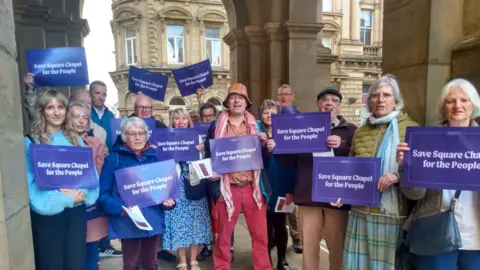
So, for now, this is an invitation rather than a recruitment drive, a negotiation or any kind of offer.
If you've performed there, worked there, visited there, supported it, worried about it or simply wondered what might happen next, I'd be interested to hear what Square Chapel means to you.
I don't have all the answers. Plainly not.
But if this building is ever to stand for something again, the answer will have to come from more than one person, more than one organisation and more than one version of the future. The people who used the building, the people who live around it, the artists and the businesses in the town all need to be heard. That, to me, is the heart of it.
And if I'm asking why I should be part of that conversation at all, the best answer I can give is that my working life has left me with a particular set of skills for awkward, real-world problems. I have spent the last decade running Hawleys, and more broadly I have worked around buildings, plant and infrastructure, budgets and people, and the unglamorous discipline of making things work rather than just talking about them. That does not make me the answer, and this is not an application dressed up as a blog post. But it does explain why I feel pulled to be useful if there is a useful role to play.
That seems worth a conversation.
Source note: Watling Real Estate marketing material; Calderdale Council statements; Equity statements; Telegraph & Argus reporting.
For more of my thoughts on places, people, business and the things we are told versus the things we can actually see, you can find the rest of the blog here.
if anything I've said today struck a chord with you and you'd like a chat or if you have a particular challenge with energy, power & infrastructure, business generally or you might like to use the studio, drop me an email at andrew@aelhawley.com - you can drop a comment below and, I think I'm supposed to say like and subscribe but I won't. See you on Sunday in the field.. that to be clear, isnt my garden.